

The Smart Way to Scale a Fashion Brand: Fractional Product Development + Lifecycle Marketing
If you’ve been running your fashion brand for five to ten years, you’ve already done what most people only dream about: you started something, built real traction, and found out what your customers actually want.
You’ve tested styles. Found a few best-sellers. Shipped more orders than you ever expected when this all began.
But here’s the thing no one really talks about: growing a brand gets more complicated as you go.
Not because you’re doing anything wrong, but because now, the stakes are higher.
Maybe you’re…
Selling more units, but feeling squeezed on margins
Tired of chasing factories or fixing quality issues
Feeling the pressure to stay relevant as trends change fast
Struggling to keep up with content, launches, and customer expectation
That’s the moment where things shift. You’re not just “starting up” anymore, you’re building for long-term growth.
This guide was created for fashion founders who’ve made it through the early grind and are ready to scale smarter, without burning out. We’re talking about:
Developing new product ideas with less guesswork
Making bigger inventory investments with more confidence
Strengthening your vendor relationships without micromanaging
Using customer data to make better decisions, faster
If you’ve been doing everything yourself for years, and you’re ready to build systems that actually support your growth, you’re in the right place.
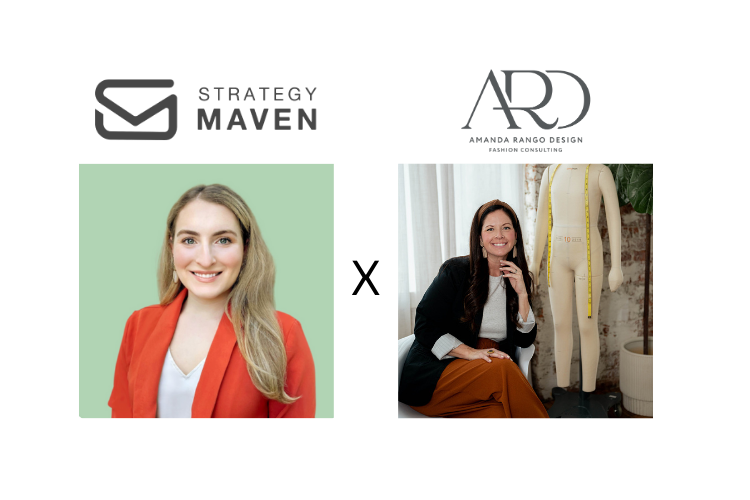
This guide was created by ARD Fashion Consulting in collaboration with Strategy Maven Agency
Introduction: The 3–5 Year Inflection Point for Fashion Brands
Once you’ve been in business a few years, things change.
You’re no longer just trying to prove your idea works; you’re trying to keep up with demand, protect your time, and grow without feeling overwhelmed.
You may have begun with a combination of private label products, print-on-demand (POD), or vendor-led development. And those were great tools to get your business off the ground. But now, they’re starting to show their limits.
Here’s what we see with brands at this stage:
Margins feel tighter (you’re selling more but not earning more)
Quality is inconsistent (especially with growing volume)
You’re limited in how you can evolve or stand out
Customer expectations are rising, and fast
This is the point where smart founders stop trying to do it all alone and start building real systems to support their next level of growth.
That doesn’t mean hiring a huge team or blowing up your budget. It means making strategic upgrades in two key areas:
How you develop product
How you connect with your customers
Why Private Label & POD Stop Working at Scale
You might have launched your brand using private label products, print-on-demand (POD), or a vendor-led development model. These were smart, low-risk ways to enter the market. You tested your ideas, built an audience, and made real sales, all without reinventing the wheel.
But now, you’re scaling. And those same tools that helped you start are starting to slow you down and start to show real limitations.
Private Label: You’re choosing from a pre-set catalog of products, which means you can’t fully control fit, fabric, or design details. That makes it harder to differentiate, especially as your marketing and brand presence evolve. Your best-sellers might be identical to a dozen other brands, and you're stuck with standard sizing or MOQs that don’t reflect your goals.
According to Shopify, “One of the most significant tradeoffs with private labeling is that you rely on someone else to make your products. If your manufacturer faces production delays or quality issues, it can quickly lead to stockouts, unhappy customers, and pressure on your brand’s reputation.”
Print-on-Demand (POD): POD gives you fast, low-investment testing—but the trade-off is thin margins, slow fulfillment, and zero product control. You can’t refine fabric, improve fit, or scale quality. And once demand grows, the fulfillment model often can’t keep up.
Vendor-Led Development: This one’s trickier. Your manufacturer helps create your designs — but they own the tech packs, patterns, and specs, not you. That means you’re tied to one vendor, with no ability to dual-source or negotiate from a place of power. It feels convenient until you need more flexibility or want to scale.
These approaches aren’t “wrong”, but they’re not built for growth. As you scale, you need:
Control over fit, fabric, and function
Ownership of your product assets (tech packs, BOMs, patterns)
The ability to iterate quickly and dual-source when needed
A product that aligns with your marketing goals, not limits them
When your product development process matures, your brand gets more resilient. You’re not just selling what’s available, you’re building what your customer wants, and delivering it with consistency, quality, and margin.
That’s the difference between chasing growth and designing for it.
What “Full Product Development” Really Entails
Let’s clear something up: full product development doesn’t mean over-designing or overcomplicating. It’s not about creating a huge line or hiring an internal team to manage every detail.
It’s about building repeatable systems so you can scale with intention, not chaos.
If you want a deeper look at how structured product development systems help fashion brands grow sustainably, Techpacker breaks it down beautifully in this guide on scaling through clear product development processes.
At ARD Fashion Consulting, we see product development as a streamlined, strategic process designed to reduce risk, improve margins, and free up the founder from day-to-day micromanagement.
Here’s what full development really looks like:
Concept & Assortment Architecture: Start with strategy, not sketches. What’s your product mix? Where’s the white space? How do new styles build on proven sellers?
Fabric & Trim Sourcing: Development isn’t just about design, it’s about sourcing smart. The right materials support both your brand identity and your financial targets.
Tech Packs, Fittings, and Production Readiness: You need clear documentation (tech packs, BOMs, specs) that vendors can execute accurately, without rounds of back-and-forth. Better inputs = better outcomes.
Vendor Communication & Quality Control: A strong process lets you oversee without micromanaging. That means pre-approvals, timeline milestones, and quality checkpoints, so you can scale without constant fire drills.
Ultimately, full development is about owning your product, not just ordering it.
You move from relying on vendors to leading the process. And that gives you the clarity, control, and margin to grow your business on your terms.
Why Most Founders Don’t Need a Full Internal Team (Yet)
When your brand starts growing, it’s easy to think the answer is a full in-house team. Think designers, product developers, production managers, marketing leads. But let’s be honest: that overhead adds up fast, and most founders still wear too many hats as it is.
The truth? You don’t need a massive team.
You need the right experts, at the right time, in the right seats.
That’s where fractional support comes in, on both the product and marketing side.
At ARD Fashion Consulting, we help foundersscale with product systems, sourcing strategies, and development processes built for growth. But the product alone isn’t enough. Without strong marketing systems behind it, even the best-designed collection can fall flat.
This is why we align so well with partners like Strategy Maven Agency, who specialize in owned channel marketing (email & SMS) that fuels retention, drives lifetime value, and complements every product launch.
Here’s how fractional support works across both sides of the business:
On the Product Side (ARD):
Senior-level decision-making without full-time hiring
Access to vetted manufacturers in our network, tech pack creation, design strategy, sourcing, and production oversight
Systems that reduce chaos and increase control, so launches feel smooth, not stressful
On the Marketing Side (Strategy Maven):
Advanced email & SMS strategies to nurture your customer base and drive repeat sales
Segmentation and flows aligned with your product roadmap
Launch campaigns that sync perfectly with product development timelines
Messaging that elevates your brand alongside better product quality
Together, this dual-fractional approach means you can scale with clarity, without overextending your team, budget, or sanity.
You stay focused on leading the brand.
We help execute the infrastructure that makes growth sustainable.
Product Alone Doesn’t Scale a Brand—Systems Do
Once you’ve built a strong product foundation, the next phase of growth isn’t about doing more, it’s aboutdoing things better.And that means building systems that help your business run more efficiently, sell more strategically, and scale with less guesswork.
This is where many growing brands get stuck:
They pour time and resources into product upgrades but don’t match that investment with marketing systems that convert andretain customers.
You don’t just need great products, you need the right infrastructure to sell them consistently.
The Role of Lifecycle Marketing
Owned channels like email and SMS are some of the most powerful (and profitable) tools at this stage—but they’re often underutilized or poorly timed. That’s where Strategy Maven Agency brings its expertise to the table.
While ARD ensures your product is built to stand out and scale, Strategy Maven helps ensure it’s supported by marketing that performs.
Here’s how strong lifecycle marketing complements better product systems:
Post-Purchase Flows: nurture the customer experience and drive second purchases
Product Launch Campaigns: sync with your delivery windows and inventory availability
Segmentation: lets you talk to your VIPs, first-time buyers, and browsers differently
Consistent Messaging: reinforces your product value and brand story as you grow
Discover the benefits of lifecycle marketing and how it fosters customer retention and long-term value with Insider One’s quick guide.
In other words, your product and marketing strategies should evolve together, not in silos.
Aligning Product Development with Lifecycle Marketing
At this stage, your product and marketing strategies can’t live in separate lanes.
Your development calendar, inventory decisions, and pricing model should directly inform your email and SMS strategy, and vice versa.
Here’s what that alignment looks like in action:
Product launches are timed with email/SMS campaigns that warm up your audience and drive urgency
Customer feedback from post-purchase flows helps guide future design or fit tweaks
Repeat purchase flows are powered by strong product quality, accurate fit, and thoughtful merchandising
Higher AOV (average order value) supports more sophisticated segmentation and message testing
This is where Strategy Maven and ARD Fashion Consulting become a powerful duo, building systems on both sides that support each other. You don’t need dozens of new SKUs or a new collection every month. You need intentional product development backed by lifecycle marketing that moves with your customer.
When your product strategy and marketing flows are in sync, scaling becomes simpler, more sustainable, and far more profitable.
What Scaling Looks Like When Done Right
Scaling a fashion brand doesn’t mean doing more, it means doing better.
At this stage, you’re not throwing spaghetti at the wall anymore. You’re refining what works and creating systems that support growth without burning you out.
Here’s what smart scaling actually looks like:
Fewer SKUs, stronger margins: doubling down on what sells
Planned, predictable launches: not last-minute scrambles
Customer insights driving development: not just intuition
A fractional team: giving you senior-level support without full-time overhead
And most importantly: You move from managing every detail to making high-level decisions.
Your brand becomes bigger than you, and that’s exactly the point.
The Modern Model for Building a Fashion Brand
Let’s be real: scaling in today’s market isn’t about launching more styles or hiring a big team.
It’s about making smarter, sharper decisions at the right time — with the right partners beside you.
If you’re in years 5–10 of building your fashion brand, you’re likely asking:
How do I increase margins without sacrificing quality?
How do I stop micromanaging and stay in my zone of genius?
How do I build a brand that lasts — not just a trend that fades?
The answer? A modern model that blends two essential systems:
Smart product development: intentional design, better sourcing, clean production
Lifecycle marketing: email and SMS strategies that turn one-time buyers into loyal fans
At ARD Fashion Consulting and Strategy Maven Agency, we’ve helped founders grow beyond solo scrappiness, into scalable, sustainable brands with real staying power.
Because the brands that last aren’t doing more, they’re doing what matters.
Ready to scale your fashion brand with less guesswork and more support?
Let’s talk about what the next phase could look like — with the right product development and marketing systems working together.